Helping You Make a Difference
Discover resources, advice and inspiration for ways to protect your local environment.
Wildlife Gardening Booklet
Ideas for making gardens and community spaces more useful to wildlife and pollinators.
Beds for Bees guide
Guidance for community groups considering a well-designed, maintainable pollinator bed.
Corporate project brief
Start with your location, intended participants, timescale, internal objectives and broad budget parameters.
All about Pollinators
Our diverse pollinators (butterflies, moths, bees, wasps, flies, beetles, birds, etc.) require plants with a variety of flower forms and flowering times to source their food. The process of pollinating these plants is an essential component of a thriving ecosystem. It allows plants to fruit, seed and reproduce and, in so doing, provides food and habitat for a range of other creatures (that includes ourselves). Pollinators themselves, particularly invertebrates, are also a major source of food within the ecosystem
What are pollinators and why are they important?
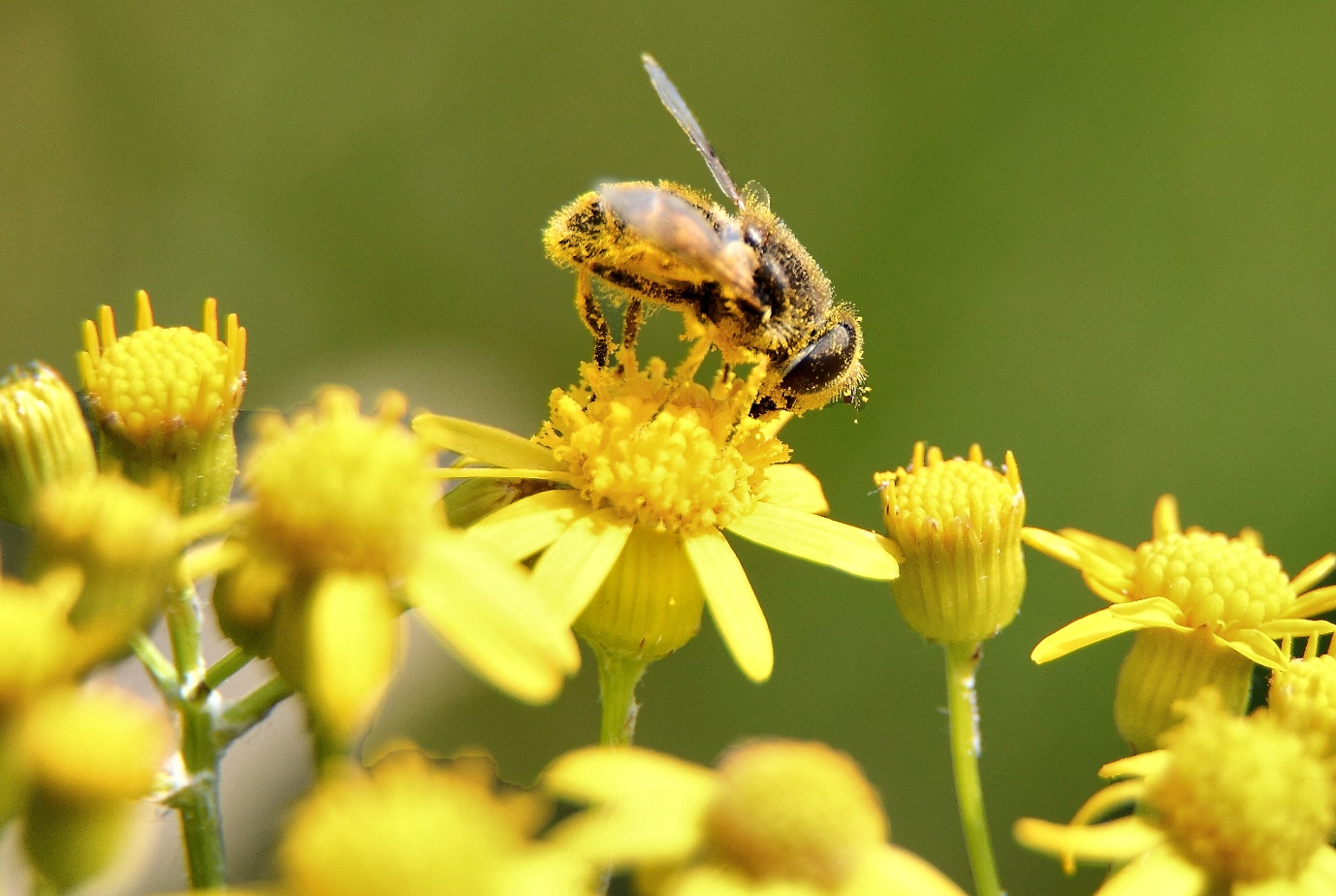
A pollinator is any animal or agent that moves pollen to a plant and so allows fertilisation. The process of fertilisation enables plants to reproduce by developing seed. Seed is often associated with a plant’s fruit, which plants use to attract animals as a means to disperse their seed. Some of the most effective pollinators include bumblebees, solitary bees, wasps, honeybees, flies, hoverflies, moths, butterflies, and some beetles.
Did you know:
Pollinators facilitate reproduction in 90% of the world’s flowering plants.
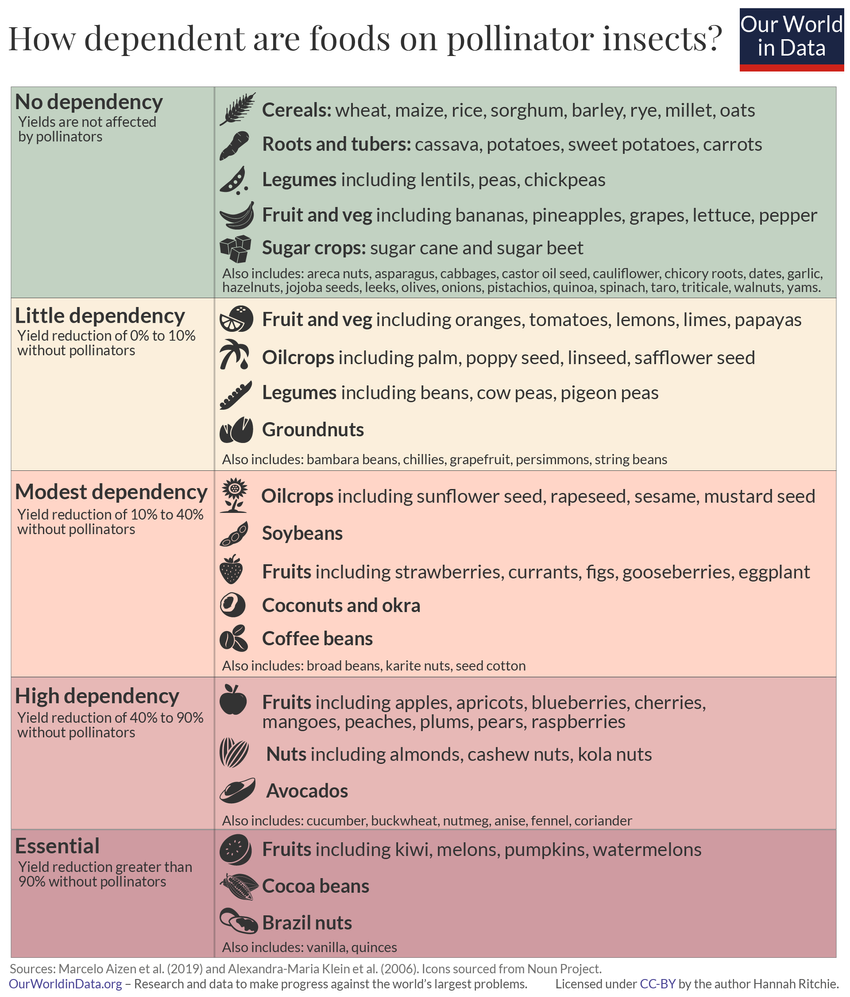
Without pollinators, the diversity of fresh, nutrient-rich produce would dramatically decline. We would essentially become much more dependent upon staple crops such as cereals, roots and tubers and a limited range of fruit and vegetables. There would also be no chocolate.
Our reliance on pollinators is likely to increase. As economies develop, diets tend to shift from staple crops (which typically have low, or no dependency on pollinators) towards being based on a more diverse mix of foods such as fruits, vegetables, nuts and other foods which are often heavily reliant on pollinators.
So, why are pollinators in decline?
Loss of Habitat – Pollinators rely on a range of habitat types to breed, nest and forage. Due to the expansion of urban areas, deforestation and loss of wildflower habitat, we are losing many of the spaces pollinators need to survive.
Pesticides – Herbicides can remove potential food plants and prey species for pollinators. Pesticide residue can be picked up by foraging pollinators and taken back to the nest/colony, which can have significant impacts on survivorship for the entire group. Pesticides also bioaccumulate in the ecosystem, negtatively impacting species higher in the food chain (including ourselves).
Climate change – As we have seen in recent years, climate change is having a profound effect on our world and the life it supports. Broadly speaking, its effect on rapidly altering earth’s environmental conditions is resulting in wide spread declines in biodiversity as species are unable to adapt quickly enough.
We have the expertise and flexibility to design and project manage large scale projects that enhance spaces for people and wildlife, or smaller spaces such as our Beds for Bees.
Our work
Pollinator and biodiversity resources
Species Identification Guides
Websites
Insects and Wildflowers:
www.butterfly-conservation.org
Amphibians and Ponds:
Wildlife Gardening
Plants for pollinators:
Schools
Become a ‘Bumbleebee-friendly School‘ with the Bumblebee Conservation Trust
Scottish Government Pollinator Resources
Peat-free and Organic Resources
Guides to Pesticide Alternatives/Organic Methods of Weed Control:
General Plant Information
Distribution and ecology of native plants